• On the 8:27 a.m. slow from Dadar to Churchgate, Shantilal Biswas stood in the doorway like a well-behaved sardine. He was middle-aged in the sincerest possible way—forty-seven going on “beta, you just focus on your job.” His belly was not a belly so much as a polite suggestion of one. His hairline had retreated respectfully, like a gentleman yielding a seat to a senior citizen. He wore the uniform of his tribe: office shirt in a shade of blue the Pantone catalogue might call “GST Filing,” and trousers whose creases had survived the monsoon solely through stubbornness.

    He was thinking, as he did most mornings, of the Grand List.

    The Grand List had twenty-three items. It lived in the Notes app and in an increasingly superstitious corner of his brain. “Points of Inflection,” he called them, because he’d read a LinkedIn article once. If he could change just one, his life—he believed with the evangelical certainty of an uncle who’d just discovered kombucha—would have turned out spectacularly different.

    There was the big one: Bulbuli. “Call her back in ’99 when she rang from the PCO.” There was the stock market one: “Put 50k in Titan in 2002—NO SELLING.” There was the real estate one: “Buy a kholi at a Lower Parel chawl when Mausi said, don’t be a fool, let it go.” And the smallish-but-actually-big one: “Don’t fight with Anjali about the ‘useless’ food processor; apologize.” (He had apologized eventually, but late apologies, like late trains, arrive with too many explanations.)

    Shantilal clutched his lunchbox—aloo posto with a seditious green chilli—and sighed. The train lurched into Churchgate, and life, like a borewell, kept droning.

    ***

    Bhooter Raja arrived in the most respectable way a ghost can: inside the lift of a BMC building, exactly between the fourth and fifth floors. One moment Shantilal was alone, the next he was accompanied by a gentleman in a cream dhoti and a blazer that had strong opinions about shoulder pads. The gentleman’s moustache curled at the ends like quotation marks around a punchline.

    “Nomoshkar,” said the gentleman. “I am the King of Ghosts. In this building, at least. The bigger king handles South Bombay; he has a union.”

    Shantilal stared at the lift pane. It reflected two men: one regally spectral, one stubbornly corporeal. The spectral one adjusted his blazer and sniffed. “Tell me, Shontilal—”

    “Shan-ti-lal,” said Shantilal, by reflex.

    “—Shan-ti-lal, why is your face like a rejected brinjal?”

    “I was thinking,” said Shantilal, “if only I could change one thing… my life would be… different.” He didn’t say “better.” He was Bengali in Mumbai; the word better had to be negotiated like a rent increase.

    “Arre, toh bolo,” said Bhooter Raja kindly, as if granting a turn in antakshari. “Today is your lucky day. I grant you one boon: change one thing from your past. One. Thing. See how it changes your future.”

    “Anything?”

    “Anything,” said the King. “Except the outcome of India-Pakistan matches. That department has its own heavenly committee. Very political.”

    The lift gave a token shudder, like an old aunt disapproving of mixed marriages. A light flickered. Shantilal’s heart banged the grill.

    He should have said, “Call Bulbuli back.” He should have said, “Buy that 1BHK in Lower Parel.” He should have said, “Tell Baba I forgive him.”

    But the Grand List, in its entirety, absconded from his head. Blank. The way your mind goes smooth as a dosa pan just when someone says, “Name five countries in Africa.” In that sizzling panic, Shantilal’s tongue, which had never been under his control, reached blindly into the attic of his memory and pulled out something small, dusty, and ridiculous.

    “Okay,” he blurted, “I will change my first email ID.”

    Even the lift stopped humming out of surprise.

    “Your what?” said Bhooter Raja.

    “My first email ID,” said Shantilal, sweating. “At the Sify cybercafé in 2003. Instead of ‘shantilal_b@rediffmail.com’ I will make it ‘shanti.lal@rediffmail.com.’ One dot. That’s all.”

    The King blinked, then smiled with dangerous benevolence. “One dot? Shobcheye chhoto payra o kotha niye ashe. Even the smallest pigeon brings news.”

    He snapped his fingers.

    The lift hiccupped.

    The doors opened.

    And Shantilal stepped into a hallway that smelled faintly of lemongrass and improbable destiny.

    ***


    The first thing he noticed was his shoes. They were not shoes; they were curated experiences for his feet. The second thing he noticed was a brass nameplate on an apartment door that said “Shanti Lal, Wellness Architect.” Underneath, in smaller letters, “(formerly Shantilal Biswas).”

    Inside his own house (which, thankfully, was still Anjali’s house too— thank you, Boroline), a bamboo plant leaned in a corner like a diligent intern. There were yoga mats rolled up like the future. There were low cushions that said “Breathe” in fonts that had gone to private school. The old Godrej almirah had been painted a rebellious teal.

    And there was Anjali, in linen, looking suspiciously radiant. “Guruji,” she said, teasingly, then rolled her eyes. “Come in. Some TV people called. Again. And your students from the ‘Mindful Mondays for Mid-Managers’ cohort want to shift their session because of naag panchami.”

    “Guruji?” said Shantilal.

    Anjali grinned. “You’re trending again. Someone cut together all your ‘Drink water first, then panic’ clips. It’s a proper reel. You’re famous in Thane now.”

    He sat down gently, like he’d been rented. On the centre table was a copy of a glossy magazine: Corporate Calm. The cover star was him, eyes closed mid-breath, captioned “SHANTI LAL: HOW ONE EMAIL CHANGED MY LIFE.”

    He read like a man who had found a mirror he didn’t apply for.

    “Once an auditor at a government project office, Shanti Lal is now the Wellness Architect Fortune 200 leaders call when their backs hurt from spreadsheets,” the article announced. “His signature method—Five-Minute Shanti—combines breath, Bengali common sense, and a prodigious mastery of WhatsApp groups. He discovered his vocation by accident in 2006, when an invitation for the revered meditation teacher Shanti Lal was misdirected to his email: shanti.lal@rediffmail.com. He attended the event to explain the mix-up, accidentally took the stage, and told 200 stressed sales executives to (quote) ‘chew slower and stop forwarding nonsense.’ The video went viral before viral was a thing. The rest is self-care history.”

    Shantilal looked up. Anjali watched him with the fond exasperation of someone who had ironed his kurtas for TEDx. “You still get stage fright,” she said. “In a very adorable way. You say ‘folks’ too much. Your followers think it’s your mantra.”

    He tried to inhale the new air and coughed on success. “Where’s my tiffin box?”

    “Guruji,” said Anjali, “your 12:30 is a CFO who had a meltdown because his Excel autosaved in the wrong folder. You’ll be fine. Just watch out for the ‘alpha breathers’—they try to out-inhale you.”

    He staggered into the bedroom. On the wall were framed photographs of him sitting on unforgiving floors with very forgiving smiles, flanked by people whose job titles were longer than their lunch breaks. In one, he stood with an IPL team owner, both holding a giant water bottle like a trophy. In another, he was at a Ganesha pandal, teaching aunties how to do neck rotations without knocking over modaks. In all, his shoulders were relaxed in a way his old shoulders had only read about.

    His phone pinged: “Namaste Guruji, quick tip for in-laws coming for ten days? – Rajeev.” Another ping: “Can you bless our new office ergonomic chairs?” – Sneha (HR)

    He checked WhatsApp. He had three groups named Shanti Squad (one with the ‘™’ sign). He had fan art of himself sitting cross-legged atop a Mumbai local, like a deity of punctuality.

    He went to the balcony. Mumbai was the same: insistent and golden, a city that could make a melody out of horns. Somewhere, a pressure cooker sang. Somewhere, a dog debated a crow. Somewhere, a child said, “Mummy, I did not hit him, I only touched his face swiftly.”

    He closed his eyes. A memory arrived like an auto in rain: uninvited and miraculous.

    Sify cyber café, 2003. Fans rattling like gossip. The first time he made an email ID. He had typed “shantilal_b,” but the session crashed. He had typed “shanti.lal” just to try a dot. The dot had, in this timeline, opened a portal.

    And because of that dot, in 2006, the invitation meant for a meditating saint had landed in his inbox. He had gone to apologize in person. Someone had assumed he was the guru. He had gone on stage to correct the misunderstanding. Someone had clipped on the mic. He had panicked and said, “Folks, first drink water.” Two hundred men had obediently sipped. And the universe, moved by his nonsense, had decided to be generous.

    A dot. Beta, a dot.

    “Baba!” called out a voice that had—to his knowledge, in his previous life—no business existing. He turned. There stood a boy of sixteen with his eyes and Anjali’s nose, backpack slung, speaking in a mouthful of city. “I’m going to Harkat for poetry open mic. Don’t give me tips on breathing while reading. We’re going to perform and then not get into anyone’s car, because safety.”

    “Uh,” said Shantilal.

    Anjali came to stand beside him. “I told you we had him,” she said, reading his face. “Monty. You forgot, Guruji? Your memory is like Vodafone in a tunnel.”

    Monty rolled her eyes while stuffing earphones into a pocket already full of bakery receipts. “Baba, you’re trending for saying ‘the office is also a body,’ by the way. My friend wrote an essay. Can I borrow your black kurta? I’m doing a piece on fathers who alphabetize their spice racks.”

    “I don’t alphabetize,” said Shantilal, wounded. “It’s by pungency.”

    Anjali snorted. “Go. Bless some spreadsheets. Try not to tell anyone to hydrate an Excel file.”

    ***

    He went to South Bombay in an Ola whose driver insisted Shahrukh once sat exactly there, and fate is in seatbelts. The CFO awaiting him in a glass box had the pallor of a man who’d been personally betrayed by pivot tables. Shantilal sat, crossed his limbs with the gravitas of someone who’d learned it from YouTube, and said, “Folks—” to one person “—first drink water.”

    The CFO obliged. Then he began to speak.

    “Your file has a history of saving in the wrong place,” Shantilal said, in his domain—absurd advice distilled into compassion. “You have a history of saving yourself in the wrong place. When the file does this, it is crying. So are you. Make a folder called ‘I Deserve Better.’ Put everything there. Later, make another called ‘Archive My Pain.’ Put everything there. Then tell your boss you need a quiet room between two and four, or I will come and do yoga here and make corporate history.”

    The man nodded, tears breeding constitutional rights in his eyes.

    It turned out to be the easiest thing in the world—to say simple sentences with your whole body. People mistook it for wisdom. People tipped.

    By late afternoon, he had blessed four chairs, three managers, and a refrigerator. He had said, “Take a breath” twelve times and meant it at least eight.

    Back home, Anjali put a bowl of muri on the table. “Remember Bulbuli?” she said, casually, as if dropping a century into a teacup.

    He froze.

    “Of course,” he lied. “I always… remember… Bulbuli.”

    “She messaged your shantilal_b address,” said Anjali, not looking up. “The one you never check now. There’s a reunion. She said she’s bringing her son.”

    A bruise bloomed on a part of him he had pretended did not exist. The Grand List ghosted him with a spiky laugh.

    “Do you—” he cleared his throat, which had suddenly turned into Juhu beach. “Do you mind if I…”

    “Go,” said Anjali. “Wear the blue shirt. Take the black umbrella. Don’t propose to anybody.”

    He leaned down, kissed her forehead like it owed him money. “You’re—”

    “—the one who found your email password when you forgot it,” said Anjali. “I know.”

    ***

    On the way to the reunion, Mumbai rained like it had misread the script and was overacting. Shantilal stood under the awning of a bakery, chewing a sugar-dusted bun and waiting for the downpour to downgrade itself. As he watched, two college boys in one shared umbrella passed by, their laughter bouncing off puddles like rubber balls. The city contained so much life; you could never finish the whole plate.

    At the hall—rented sentiment and perfumed nostalgia—there were name tags, paper cups, and people making small talk with the ferocity of war correspondents. He found Bulbuli by the comfortable slope of her shoulders. She turned; time, that lousy editor, had left the best parts uncut. Her eyes did that thing Kolkata girls’ eyes do when they recognize an old friend and an old absurdity in the same person.

    “Shanti,” she said.

    “Bu” He coughed. “Bulbuli.”

    “You look…” she began, then surrendered. “You look like you have a new email ID.”

    They sat, two people who had once been a unit of chaos. They spoke of the years like reviewers. She worked at a public library now, she said, teaching boys who thought Macbeth was a footballer to love sentences. She had a son whose hair was a conspiracy against combs. She had a laugh that hadn’t retired.

    “I called you from a PCO, remember?” she said, softly. “In ‘99. You didn’t call back.”

    “I meant to,” he said, and was surprised to hear the truth come out on its own two feet. “It was on my list.”

    “List?”

    “Points of inflection,” he said. “A fancy way of saying ‘regrets I have curated.’”

    She smiled at the ridiculous things he had always said. “Well,” she said, “you look… content.”

    He thought of Anjali alphabetizing pungency, of Monty demanding a kurta, of CFOs discovering their lungs. He thought of the dot. It felt like an accident that had chosen to be kind.

    “I am,” he said. “In such a funny way.”

    A silence sat between them—pleasant, plucked, inevitable. They were not a story anymore; they were an anecdote in each other’s biographies. Outside, rain took a smoke break.

    “Here,” she said, taking a small book from her bag. “My favourite Tagore lines. I keep a copy for friends I didn’t marry.”

    He took it like a blessing. On the title page she’d written: “Faith is the bird that feels the light…” He smiled. Of course.

    They hugged the careful hug of people who had made different good mistakes. Then she was gone, trailing an unfashionable grace.

    He stood in the hall until someone told him to stop blocking the snacks. He went home with a book and an appetite and a sense that the universe had shoved him gently into the correct lane.

    ***

    At night, in the kitchen, he found the Grand List, wobbly and transposed by events. He took a pencil and wrote: “Item #0: One dot.”

    Anjali leaned against the counter, watching him with that look—half accomplice, half immigration officer. “So?” she said.

    “She’s happy,” he said. “I am, too.”

    “Good,” said Anjali. “Happiness is like Hilsa. Seasonal, slippery, and the bones can hurt, but you keep chewing.”

    He laughed. “Will you allow me to be unbearable for a moment?”

    She sighed theatrically. “Proceed, Guruji.”

    He raised the pencil like a baton. “Maybe the point of inflection is not the height of the cliff but the angle of your head.”

    Anjali stared. “Take out the trash.”

    ***

    Weeks passed in a montage only Mumbai could choreograph- trains that flirted with chaos, samosas that healed generational trauma, elevators that negotiated with gods. Shantilal blessed offices like a priest of the spreadsheet. He taught breath to people who wanted promotions. He told one man to resign and rest for two months; the man returned with a face that had remembered it was human.

    He learned new things about fame. That it arrives like a stray dog—hungry, lovable, and requiring you to rearrange your life. That people will project onto you; they will put their fear in your pocket because you look like you have zip. That it is possible to be both guru and fool, and on most days the fool has better jokes.

    He also learned to read his inbox.

    He found, in the dusty back alleys of his shantilal_b account, a thousand almosts. Spam from a decade. A thread where a stranger had sent him a kind paragraph when he was not yet the sort of man who received such things. A message from a long-ago manager: “I was rude. Sorry.” A chain of invitations for someone else entirely, which had, in this timeline, rerouted the river of his life.

    A dot. Beta, a dot.

    He replied to one: “Dear Sir, apology accepted. We were all sharp then; now we try to be round.”

    He wrote to another: “Thank you for the kind paragraph from 2012. It took the scenic route. It has arrived.”

    He sent Bulbuli a photo from inside the public library he had visited on a whim one afternoon, a row of boys reading like a plot twist. “Your empire,” he wrote. She replied with a sticker of a dancing fish.

    In his sessions, he started telling the story of the dot. Not as a sermon, but as a convenience. People needed metaphors that could travel economy class. “Your dot,” he would say, “might be a comma you put after your name. It might be the day you answered a phone call. It might be the shut-up you did not say. Choose small and honest; the big things come dressed in little clothes.”

    They listened. Sometimes they cried. Sometimes they asked if they should buy gold. He said he was not that kind of guru.

    ***

    One evening, the lift stalled again. Shantilal smiled into the mirror. He did not panic. He had snacks. He had bars of peanut chikki the way survivalists have solar panels.

    The air went wobbly. The King of Ghosts stepped into focus, blazer still producing shoulder opinions.

    “How’s the dot?” asked Bhooter Raja, as if inquiring after a child.

    “Powerful,” said Shantilal. “Unemployed men of Worli breathe at me in the evenings.”

    “Very good,” said the King. “You chose a small hinge. The door was large.

    Shantilal looked at his face—the same, mostly. Some parts softer, some parts sharpened by being useful. “I had a list,” he said. “Things I would change if I could. I forgot the list.”

    “Sometimes forgetting is the boon,” said Bhooter Raja, patting his moustache. “Had you remembered, you would have chosen drama. Drama gives you applause. Dots give you a life.”

    Shantilal nodded, then chuckled. “There is one small problem, though, O King.”

    “Bolo.”

    “Because of the email ID, people keep spelling my name as Shanti Lal—two words. In bank forms. In KYC. Even Excel. The registry office called me First Name: Shanti Last Name: Lal. Our neighbour calls me ‘Lalu.’”

    The King laughed the laugh of men who have eaten wedding biryani on rooftops. “Aha. The universe is not a typo-free zone.”

    “What do I do?” said Shantilal. “Change it back?”

    The King considered, then shook his head. “Naa. Keep it. A little confusion is good for the ego. Also, Lalu is a strong name.”

    They grinned at each other, the man and the memory. The lift resumed its opinion about friction.

    At the door, before the ghost dissolved, Shantilal said, “One more boon?”

    “Arre, boom-boom,” said the King, indulgent as a Bengali uncle at a rice festival. “You have become greedy, Guruji. But ask.”

    “I want to remember,” said Shantilal, surprising himself, “to keep my present as my main subject.”

    The King smiled in a way that made the tube light look lyrical. “Approved,” he said. “No take-backs.”

    And then he was gone, as kings often are when the punchline has landed.

    ***

    On a Sunday that smelled of frying and damp newspapers, Shantilal, Anjali, and Monty sat on the floor, playing carrom with the seriousness of diplomats. Between thumb flicks, Monty performed lines from his poem-in-progress (“Fathers who fold T-shirts like apologies”), Anjali heckled (“Make it ‘Fathers who fold badly like apologies’”), and Shantilal engineered shots like a man who believed geometry owed him money.

    “I wrote something,” said Monty, sliding a scrap of paper across to him when Anjali went to rescue an appam from the pan. “You can use it in your sessions if you want. Or not.”

    He read. It said:

    “At the heart of a city is a tiny dot,

    a kiosk where the life you meant to live

    accidentally forwards to you.

    You open it.

    You reply all.”

    He stared at his son. “This is… khub bhalo,” he said quietly. “It will make grown men in glass offices leak.”

    “I know,” said Monty, with imperial confidence. “Also, can I have money for an Uber?”

    “Take the train,” he and Anjali said together, then laughed so hard the striker skittered under the sofa and refused to come out.

    After lunch, when the city performed its siesta like a tradition, he settled by the window with Tagore’s lines and a cup of suspiciously expensive tea. He wrote another list—not of inflections, but of dot-sized practices.

    • “First drink water.”
    • “Breathe before pressing send.”
    • “Don’t sort people by pungency; keep that for spices.”
    • “Say sorry in the same decade.”
    • “Learn one new Marathi joke for auto drivers.”
    • “Bless chairs only upon request.”

    He looked out. A kite hung in the sky like punctuation. Children argued about whose cricket ball it was. Somewhere a pressure cooker’s second whistle declared the end of world wars.

    Shantilal closed his eyes—not like a guru, not like a cartoon, but like a man who had found a bench in a crowded station and sat, not caring who thought he looked foolish. He remembered Baba’s hands, cracked like good pottery. He remembered his mother’s way of turning grief into food. He remembered Bulbuli’s laughter as a path he did not take but was glad existed. He remembered Anjali, steady as a hand on a head feverish with ambition. He remembered Monty’s poem.

    He opened his eyes with the simple responsibility of a man with an inbox.

    There would be clients who believed breathing was a scam. There would be trolls who said, “Shanti, please also fix my wife.” There would be bank forms calling him Lalu. There would be evenings when he wondered about the undiscovered chawl in Lower Parel, the portfolio he never had, the version of himself who called the PCO back. He would wave at those ghosts and proceed to soak moong.

    The dot had done its job. The rest was practice.

    At 7 p.m., on the slow train, in the doorway where gods stand, he leaned out just enough to feel the wind turn his face into a sail. He smiled at nothing. He tipped his head toward a little girl who was not supposed to be standing at the door but was, on balance, doing it like an expert. “Beta,” he said gently, “first step back, then see the view.”

    She obeyed. The city flowed past, unembarrassed by its own brilliance.

    Somewhere between Lower Parel and Elphinstone, a ghost king in a cream dhoti adjusted his blazer with pride. Somewhere, a CFO told his boss, “Two to four is my quiet room; please email.” Somewhere, a poet read a line that made a room exhale.

    And in a tiny corner of the internet, the dot that had once been the whole story blinked like a traffic light saying: now go; you have thought enough.

    “Folks,” said Shantilal, to the compartment or to the universe, who knew, “first drink water.”

    He did.

    And then he laughed, loudly enough that even the train had to smile.

  • 1. The Setup

    At 03:17 hours, December 2nd, 1805, the first dispatch arrived at the French forward command post near the village of Puntowitz, Moravia. It was brief, unadorned, and encoded in the rotational cipher preferred by Marshal Berthier’s staff: “Austro-Russian force movement confirmed. Pratzen Heights lightly held. Orders?”

    General Vandamme read it, lit a second candle, and waited.

    Sixty kilometers away, in the warmth of an oak-lined command tent, a man who had never believed in luck but everything in timing examined a wax-sealed map.

    Napoleon Bonaparte—Emperor, strategist, and ruthless gambler—leaned forward. His grey eyes rested on a thin elevation contour sketched in red ink: Pratzen Heights. He tapped the table.

    “They’re biting,” he said. “Excellent. Now we close the trap.”

    2. The Players

    Three emperors were involved, but only one had the discipline of a field officer and the instincts of a predator.

    Francis II of Austria, weary and cautious, was already running the numbers on retreat.

    Alexander I of Russia, twenty-eight and fervent, believed divine grace would carry him. His advisors—a polyglot of noblemen, German-trained officers, and erratic generals like Bagration and Kutuzov—believed in cavalry charges and fate.

    And then there was Napoleon, whose battlefield deceptions were as calculated as a bank heist. His decoy right flank had been ordered to stretch thin and feint weakness. Davout’s corps had been marching through the night, invisible in fog.

    The field—snow-laced and soaked in mist—wasn’t just terrain. It was a lure. And the bait had just been taken.

    3. The Blow

    At 08:40 hours, Soult received his orders. Two divisions, five brigades total, with artillery held in reserve. Objective: Pratzen Heights. Secure and hold. Timeframe: One hour.

    He launched without hesitation.

    By 09:15, the coalition centre, having descended into the valleys on the French right, realized too late the high ground was no longer theirs. The elevation gave the French a devastating position. Voltigeurs picked off officers. Horse artillery rolled forward.

    And Napoleon moved.

    Not emotionally. Not with fanfare. Just one word: “Now.”

    Murat’s heavy cavalry—leather-clad cuirassiers with sabres curved like scythes—broke from the rear echelon like a scorpion’s sting. They smashed into Russian infantry struggling to realign in the marshy lowlands.

    Casualties mounted. Chain-of-command fractured. Kutuzov was wounded by shrapnel at 10:12. His staff denied it for hours.

    4. The Collapse

    On the coalition’s southern wing, a bulk of retreating infantry attempted a fallback over the frozen Satchan Ponds. A thin film of ice, cracked and riddled with fatigue lines from artillery impact, bore the weight of several thousand men.

    French artillery, now repositioned with uncanny speed by Napoleon’s Chief of Ordnance, opened fire. Canister shot shredded ranks. Solid roundshot punctured the ice.

    What followed was not a retreat. It was liquidation.

    Men sank through slush and ice like coins through milk. Cannonballs ricocheted off the surface or disappeared into the black water. Some tried to swim; others drowned with muskets, packs, and winter coats dragging them down. By 12:45, the ponds were a floating grave.

    At least 2,000 were never recovered.

    Napoleon’s aide-de-camp recorded the moment in his private journal: “The Emperor did not flinch. He watched with the expression of a surgeon.”

    5. The Aftermath

    By 14:30, the field was silent.

    Napoleon offered Francis II a ceasefire by 16:00. He accepted. Alexander rode out that night with a guard escort of Cossacks, leaving behind 15,000 dead and the illusion of Allied superiority.

    The next day, French engineers probed the half-frozen ponds for salvageable matériel. What they found were muskets still clutched in frozen hands, the tricolour of a Russian regiment submerged, and the sealed satchel of a slain adjutant—still containing the Tsar’s final orders.

    Napoleon was handed the documents. He didn’t open them. He simply said: “Irrelevant now.”

    6. The File Closed

    Austerlitz was not just a battle—it was a message. To Europe. To history. To any who would challenge a mind that calculated with the precision of a watchmaker and struck with the cruelty of a guillotine.

    Six months later, in a private meeting, Talleyrand handed the Emperor a confidential report: the Austrians had officially dissolved the Holy Roman Empire. Francis had renamed himself Emperor of Austria.

    Napoleon read it, folded the paper neatly, and tucked it into his coat pocket.

    “Not Roman. Not Holy. And no longer an Empire,” he said.

    Then he dismissed the aide and walked into the garden, whistling.

    The Battle of Austerlitz was over. Europe would never be the same.

    But beneath the ice, the dead still floated—mute witnesses to what happens when gods and emperors play for keeps.

    [END FILE | CLASSIFIED | ARCHIVE: AUSTERLITZ/1805/NAPOLEON]

    Note for the readers: After reading this, if you feel you would want to read a historical fiction coming from me, please let me know on +919870071069

  • It is a truth universally ignored by publishers that when a debut book sells nearly two hundred copies in the first week (fifteen to fellow authors represented by the same dashing literary agent, five to benevolent friends not seeking income tax exemption under Section 80G and the rest to social media influencers paid to arrange bulk reviews for the book), the only logical step is to vanish into the fog like a Victorian butler wrongfully accused of larceny. Which is precisely what happened to the daring, if somewhat fragile, publisher of Mostly Mundane—the first chronicle of one Shantilal Biswas, the converted Mumbaikar caught eternally between two ill-timed misadventures.

    One moment, they were all promises and press releases. The next, poof!—vanished. No updates on the author dashboard. No more phone calls. Zero royalty slips. Not even a customary regret note scented with stale coffee and passive aggression.

    In my despair, I did what any emotionally frayed author would do. I summoned the hero of my own imagination. “Shantu-da,” I sobbed, “what now?”

    To which he replied, while fumbling for his half-used inhaler and a copy of Tinkle, “Try this Kindle thing. I hear even disgraced spiritual gurus are self-publishing cookbooks these days. Why not you?”

    Thus, dear reader, you behold on your device an uninspiring free template of a cover of Mostly Mental —a slim volume, leaner than a paratha on a government diet plan, compiled with neither a publishing house nor the blessed presence of a content editor. This little creature is a product of KDP: Kindled Desperation Publishing.

    Now, I must pause here to offer a humble apology to the tribe of paperback purists. Those stout-hearted souls who frown upon anything under 200 pages and consider a book unreadable unless it doubles as a blunt weapon. You, dear sirs and madams, may feel short-changed. But I assure you—brevity, like Shantilal’s patience with WhatsApp forwards, is often a virtue.

    So turn the page, brave reader. Step again into the curious, caffeine-stained world of our bureaucratic verandah, where hauntings come with leave applications and ghosts respect the RTI Act.

    And if you’re still miffed about the missing pages, take heart. Shantilal promises the next one will have a plot, possibly a car chase, and if budget allows, an appendix.

    Now go on. He’s waiting. And the ghost in the toilet isn’t getting any quieter.

    P.S. Mostly Mental has whimsically been put on pre-order. The content would be available on May 15. One can order it only from a Browser on Amazon (In-app purchases of a Kindle only title is disallowed) from the following link:

    Or, simply scan the QR Code below:

  • (In a parallel universe, where ‘Almost Mundane’ was released in 2024)

    (Scene: The familiar Gokuldham Society compound, Christmas lights twinkling. Residents are gathered for their annual festive get-together. A slightly tipsy Popatlal corners poor, unsuspecting Jethalal.)

    Popatlal: (Slurring his words) Jethalal bhai, tell me… tell me the truth! This whole year… all these crazy incidents… was it all… real?

    Jethalal: (Exasperated) Popatlal, what have you been drinking? Of course it was real! I almost got married twice, remember? Twice! Do you think I’d imagine that kind of trauma?

    (A hush falls over the crowd as a figure emerges from the shadows. It’s Shantilal, looking unusually serious. He taps a microphone, causing feedback to screech through the speakers.)

    Shantilal: My dear friends, neighbours, fellow sufferers… I have a confession.

    (Everyone leans in, intrigued. Babita adjusts her saree with a dramatic flourish.)

    Shantilal: For years, I’ve carried a burden… a secret that has weighed heavily on my soul. The truth is… (He pauses for dramatic effect) …I am not the mastermind behind the Almost Mundane series!

    (Gasps ripple through the crowd. Iyer clutches his chest theatrically.)

    Shantilal: The real author… the true genius behind our misadventures… is none other than… (He gestures towards a bewildered-looking Saugata, who’s trying to blend into the hibiscus bushes) …Saugata!

    (Saugata, caught red-handed, sighs and steps forward.)

    Saugata: (Muttering) Busted.

    Shantilal: And that’s not all! Prepare yourselves for the most shocking revelation of the year… nay, the century! Almost Mundane is not… (He whispers) …real.

    (A collective groan rises from the society members.)

    Bhide: (Outraged) Not real? But what about my precious Sakharam? My scooter? My sleep? Was it all a lie?

    Shantilal: I’m afraid so, Bhide bhai. Saugata here, this… this fiend, has been using Arjun’s ideas to write our stories! He feeds Arjun prompts, like “Jethalal gets trapped in a washing machine” or “Popatlal chases a runaway balloon,” and that unsuspecting boy spits out these outlandish tales!

    (Popatlal stares at the sky, his mind clearly blown.)

    Madhavi: (To Saugata) But why? Why would you do this?

    Saugata: (Shrugging) I was tired of writing. Besides, Arjun has the ability to produce these brilliant twists. It seemed like a good idea at the time.

    (The crowd erupts in chaos. Babita faints. Iyer fans her with his newspaper. Bhide threatens to sue Saugata for emotional distress. Tapu Sena, meanwhile, is busy trying to hack into ChatGPT4o to write themselves into the next “episode”.)

    Jethalal: (Grabbing Saugata by the collar) You mean… I’ve been suffering for nothing? All this time, I could have been relaxing with a nice cup of chai instead of dealing with talking dogs, exploding pressure cookers, and… and… (He shudders) …Lady Gaga?

    (Saugata, eyes wide with fear, gulps.)

    Shantilal: (Grinning mischievously) Don’t worry, Jetha. I’m sure the next instalment has plenty more in store for us. After all, Almost Mundane must go on!

    (He winks at the camera as the screen fades to black, leaving the residents of Gokuldham Society to grapple with the mind-blowing reality of their convoluted existence.)

  • Voting link open at: https://www.salismania.com/single-post/voting

    Right ho, chums! Shantilal here, popping up like a cork in a bathtub to say a quick word or two about this what-d’you-call-it, this “Salis Mania Choice Awards” business. Now, I’ve always been a bit of an outsider to these literary shindigs, more at home with a plate of bhajiyas and a good game of cricket, what? But when my old pal Saugata – that’s Saugata Chakraborty – told me he was in the running for this “Best Fiction Author” prize, well, I couldn’t just sit idly by, could I?
    You see, this chap is an author of depthless wit. Wrote a book called “Mostly Mundane,” though why he chose such a drab title for a book that’s anything but, I’ll never know. Perhaps he was dropped on his head as a baby. Dash it all, the man’s a genius! Reading his book is like riding a roller-coaster through a mango orchard, with a side trip to a Bollywood dance number. One minute you’re chuckling at some ludicrous situation involving a flying dosa and a misplaced badminton shot, the next you’re pondering the deeper meaning of life, the universe, and everything – all while trying to figure out who pinched the last samosa.
    Now, I know what you’re thinking. “Shantilal, old bean,” you’re saying, “you’re biased! You’ve probably known this Chakraborty fellow since he was knee-high to a grasshopper, sharing tiffin boxes and swapping marbles.” And you’d be right, absolutely right! Known him for years, top-notch chap. But that’s not the point, is it? The point is, the man can write! He spins a yarn like a spider spins a web, except his webs are full of wit, charm, and the occasional exploding chutney jar.
    So, here’s the thing, my dear. If you’re looking for an author who can transport you to a world of delightful absurdity, tickle your funny bone, and leave you feeling thoroughly entertained, then look no further than Saugata Chakraborty. Cast your vote for him, and I promise you won’t be disappointed. You might even find yourself spontaneously bursting into laughter at the most inappropriate moments, like during a board meeting or a solemn religious ceremony. But trust me, it’ll be worth it.
    Pip pip! And don’t forget to vote for Saugata!

  • [FADE IN]

    INT. COFFEE SHOP – DAY

    SHANTILAL and SAUGATA sip their coffee. Saugata, the creator of Shantilal in his latest book Mostly Mundane, is visibly upset.

    SAUGATA (Frustrated) I just don’t get it, dear! I sent my book to that popular bookstagrammer, the one with thousands of followers, and all that he could manage was a hideous screenshot against a spooky background with a review written AI all over it! How do these people expect us to get any leverage out of it?

    Shantilal raises an eyebrow, a mischievous glint in his eye.

    SHANTILAL (Teasingly) Well, you know how it is these days, Saugata. Authors like you, you’re all just too demanding.

    SAUGATA Demanding? How?

    SHANTILAL (Sarcastically) Oh, you know… you expect these busy influencers to actually read the book before posting a glowing review. I mean, where do they find the time? They have to pose with the book, find the perfect filter, write a witty caption… who has time to actually, you know, read?

    Saugata stares at him, unsure if he’s serious.

    SAUGATA But… shouldn’t they at least skim through it? To get a feel for the story?

    SHANTILAL (Feigning shock) Saugata! Are you suggesting they actually put in effort? Come on, man! You’re talking about influencers here! They deal with the big picture, the aesthetics, the vibes. Details like plot and character development… who needs those?

    Saugata sighs, realizing Shantilal is pulling his leg.

    SAUGATA You’re having fun at my expense, aren’t you?

    Shantilal throws his head back and laughs.

    SHANTILAL Of course, yaar! But seriously, don’t get disheartened. True readers will find your book, even without the influencers.

    Saugata manages a weak smile.

    SAUGATA I suppose you’re right.

    SHANTILAL (Patting his shoulder) Always am. Now, finish your coffee. I think I saw some jalebis at the counter…

    [FADE OUT]

  • Shantilal, a man whose blood ran as thin as the discount lassi at his local eatery, was in a state of marital disquiet. Dhanteras, the festival celebrated to welcome health, wealth and prosperity, was upon him, and Anjali, his bride of three months, was expecting a gift. A gift that, in her own words, “spoke to her soul.”

    Shantilal, whose soul communicated primarily through the medium of cricket scores and the occasional yearning for a crispy samosa from Tewari with a generous filling of dry mango powder drenched in desi ghee, was at a loss. He considered a gold chain, the classic Dhanteras choice, but Anjali had dismissed it as “gaudy.” A Lakshmi figurine? “Too commonplace,” she had declared, her nose wrinkling with the disdain of a connoisseur rejecting a substandard wine.

    Shantilal gave up on sleep after counting the millionth sheep. For the next few days, he was seen wandering the Bara Bazar like a lost soul, jostled by eager shoppers, all with a clearer purpose than him. He examined ornate silver lamps, intricate diyas, and even a rather alarming statuette of a dancing Ganesha, but nothing seemed quite right.

    One evening, exhausted and demoralized, Shantilal found himself outside a rather peculiar antique shop. It was a dusty establishment, smelling of mothballs and forgotten dreams. Intrigued, he stepped inside.

    The shopkeeper, a man who looked like he had been carved from an old banyan tree, eyed him with unsettling intensity. “Looking for something for the missus, are you?” he rasped, his voice like dry leaves skittering across pavement.

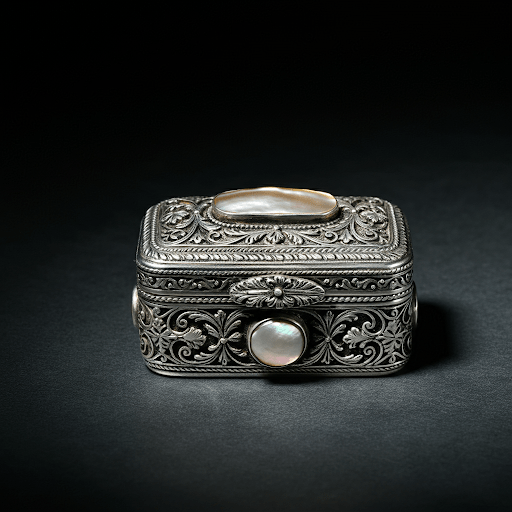
    Shantilal, startled, confessed his predicament. The shopkeeper chuckled, a sound like dry twigs snapping. “I have just the thing,” he said, disappearing into the shadowy recesses of the shop. He returned with a small, ornate silver box, inlaid with a mother pearl.

    “This,” he declared, “is no ordinary box. It belonged to a Maharaja, a man of exquisite taste and, shall we say, a keen eye for the ladies.” He winked, a grotesque contortion on his ancient face. “Legend has it, whatever a woman desires most in her heart, this box will reveal.”

    Shantilal, despite his inherent scepticism, was desperate. He purchased the box, clutching it like a lifeline.

    That evening, he presented it to Anjali with a flourish. Her eyes widened with anticipation. With trembling fingers, she opened the box. Inside, nestled on a bed of faded velvet, lay a single, exquisitely crafted… bottle opener.

    Anjali stared at it, her face a mask of incomprehension. Shantilal stammered, “I… I thought… perhaps…”

    Anjali burst into laughter. “Oh, Shantilal!” she gasped, tears of mirth streaming down her face. “This is perfect! You know how much I love that imported ginger ale, and the bottles are always so difficult to open!”

    Shantilal blinked. He had, in fact, completely forgotten about Anjali’s fondness for imported ginger ale.

    The shopkeeper, it seemed, was a man of his word. The box did indeed reveal what a woman desired most. It just so happened that Anjali’s heart’s desire was a far cry from the profound, soul-stirring revelation Shantilal had anticipated.

    And as for Shantilal, he learned a valuable lesson that Dhanteras: sometimes, the simplest gifts are the most meaningful, especially when they can open a bottle of fizzy, imported ginger ale.

  • (Those who have read ‘Mostly Mundane’ are aware of the Open Letter to the Readers where I have introduced Shanti to the world. That he has been waiting for retribution is pretty evident in the following birthday note I received on WhatsApp this morning. I now only wish more and more people to know what lies beneath that calm demeanour of his.)

    My dear Saugata old bean,

    Many happy returns of the day! I trust this missive finds you in fine fettle, with a substantial spot of tea and a slice of cake of the most agreeable dimensions within easy reach.

    Speaking of agreeable dimensions, I must say, you seem to have captured my own, shall we say, distinctive physique rather well in your tome. Though I do believe I possess a slightly more impressive moustache. A moustache, you might say, with a certain je ne sais quoi, a touch of the rakish, the devil-may-care. You, on the other hand, seem to have saddled me with a rather more… pedestrian model. A bit of a droop, wouldn’t you agree?

    But I digress. Birthdays, as I’ve always maintained, are a bit of a rum business. One moment you’re a sprightly young chap, full of beans and whatnot, and the next you’re staring down the barrel of middle age, wondering where it all went wrong. Or, in your case, perhaps wondering where the next plot twist is coming from.

    Speaking of which, old boy, I must confess I’m a trifle concerned about this whole “Mostly Mundane” business. I mean, dash it all, a chap likes a bit of excitement in his life, a spot of intrigue, a soupçon of the unexpected. Can’t a fellow trip over a stray cat or encounter a long-lost relative without it being chronicled for all the world to see?

    But fear not, my dear Saugata. I shall endeavor to inject a bit of zest into your narrative. Perhaps a daring escapade involving a runaway tramcar and a misplaced pair of trousers? Or a spot of mistaken identity at the local fishmongers? The possibilities, as they say, are endless.

    In the meantime, do have a most splendid birthday, and try not to work yourself into too much of a lather. After all, a writer’s life, much like my own, should be one of leisurely contemplation and the occasional stiff drink.

    Yours in good spirits (and hopefully a slightly more dashing moustache),

    Shantilal Biswas
    (of Mostly Mundane fame, or infamy, depending on your perspective)

    _______________________________________________________________________________________________

    If you’re wondering what this fuss is all about, it’s about time you read about the misadventures of this man of an apparently peaceful disposition. Here’s the link:

  • The air crackled with festive anticipation, a strange mix of devotion and delirium. Shantilal, still adjusting to the new ruby ring on his finger and the unfamiliar sensation of being a “husband,” trailed behind Anjali, who was navigating the throngs of pandal-hoppers with the determination of an inspired Abhimanyu approaching the Chakravyuh in a saree. He felt like a bewildered yak herded into a kaleidoscope of flashing lights and blaring loudspeakers.

    “Ready for some cultural immersion, Shantu?” Anjali chirped, her eyes sparkling with mischief.

    Shantilal, a man of quiet contemplation more accustomed to the ordered world of the his government office, merely grunted. He was yet to fully grasp the scale of Durga Puja madness that gripped the city.

    Their first stop was a pandal themed “Global Warming: The Fiery Fury of Ma Durga.” A giant papier-mâché thermometer towered over the goddess, its mercury rising ominously. The accompanying pamphlet declared, “This year, Ma Durga battles not Mahishasura, but the demon of rising temperatures!” Shantilal, sweating profusely in the humid pandal, felt a surge of unexpected empathy for the demon.

    “This one’s supposed to be amazing, Shanti!” Anjali yelled over the din, her eyes sparkling with excitement. “The theme is ‘Globalization and the Bengali Diaspora’!”

    Shantilal winced. He’d hoped for something a bit more… traditional. Maybe a nice, straightforward Durga slaying Mahishasura. Instead, he was confronted with a giant fiberglass globe, precariously balanced on the head of a bewildered looking asura, while miniature figurines of Bengalis in business suits and saris clutching laptops and suitcases sprouted from its continents.

    “It’s… something else,” he mumbled, trying to decipher the artistic statement behind a giant papier-mâché NRI brandishing a green card.

    The next pandal was even more baffling. “The Existential Angst of the Urban Millennial,” proclaimed a banner in psychedelic colours. Inside, Durga, looking surprisingly morose, was slumped on her lion, staring what appeared to be a giant Blackberry. Asuras, dressed in skinny jeans and sporting man-buns, were glued to their own devices, their faces illuminated by an eerie blue glow.

    “Get it?” Anjali nudged him, her voice a mix of amusement and awe. “It’s like, they’re all so connected, yet so alone!”

    Shantilal nodded numbly. He felt a sudden urge to escape this madness and find solace in a plate of greasy biryani.

    But Anjali was on a mission. “Come on, Shanti! This next one has the theme of “Golden Tradition of Bengal.”

    The image of paddy fields getting ready for harvest flashing in Shanti’s inward eye disappeared in a bizarre twist. The “traditional” idol was adorned with real gold jewellery, and the organizers had hired a team of hefty bouncers to stand guard, looking more like they stood inside a bank vault than in a social gathering.

    “Apparently, some businessman donated all this jewellery,” Anjali explained, her voice barely audible over the chanting of priests and the clicking of cameras. “They say it’s worth crores!”

    Shantilal felt a headache building up. He couldn’t shake off the feeling that the true spirit of the festival was getting lost amidst all the extravagance and commercialism.

    As they moved from one pandal to another, the themes became increasingly bizarre. There was another dedicated to global warming, with the demon Mahishasura depicted as a giant carbon footprint. A 100-year old puja showcased the “evils of fast food,” with the demon’s army composed of burgers and fries.

    “This is madness,” Shantilal muttered under his breath, as they entered a pandal where the idol was dressed in a replica of a famous Bollywood actress’s outfit in the latest Devdas adaptation.

    “Oh, come on, Shanti,” Anjali chided, “It’s all in good fun. Besides, look at the craftsmanship!”

    Shantilal sighed. He knew he was fighting a losing battle. He decided to surrender to the chaos, focusing on the delicious street food and the infectious energy of the crowd driving them to the next destination.

    The pandal, titled “The Metaphysics of Rosogolla,” was a monstrosity of swirling milk and sugar, with Durga, inexplicably, emerging from a giant vat of the sweet, her expression a mixture of ecstasy and indigestion. Shantilal, his head spinning, felt a deep sense of despair. He longed for the simple days before pujas became platforms for intellectual pretension and artistic one-upmanship.

    Exhausted and bamboozled, Shantilal finally stumbled upon a small, unassuming pandal. No grand themes, no philosophical statements, just a simple, serene image of Durga, her eyes radiating strength and compassion. Shantilal felt a wave of relief wash over him.

    “This,” he declared, sinking onto a nearby bench, “is what I call a puja.”

    Anjali, however, was unimpressed. “It’s a bit… basic, don’t you think?” she said, already scanning the crowd for the next “innovative” spectacle. Shantilal sighed. He realized that this was just the beginning of a lifetime of navigating the chaos of Durga Puja with his intellectually inclined wife. He could only hope that next year, the pandals would feature themes slightly less likely to induce an existential crisis. Perhaps “Durga’s Favourite Fish Recipes” or “The Aerodynamics of Asura Flight.” One could only hope.

    “Look, Shantilal!” Anjali exclaimed, pointing towards a pandal that seemed to be constructed entirely out of old computer parts. “Isn’t it innovative? The theme is ‘Cyber Shakti’!”

    Shantilal stared at the monstrosity, a giant Durga idol made of motherboards and wires, wielding a mouse instead of a trident. He wondered if this was what religious experiences had come to in the 21st century.

    As the night wore on, the lines between reality and fantasy blurred. Shantilal started seeing demons in the shadows and hearing the goddess whisper in his ear. He wondered if he was hallucinating or if the festive madness had finally gotten to him.

    As the clock resembled a recliner, they made their way back home. Shantilal’s head was spinning. He collapsed onto the sofa, overwhelmed by the sheer absurdity of it all. Anjali, however, was exhilarated.

    “Wasn’t it amazing, Shantu?” she exclaimed. “So much creativity, so much innovation!”

    Shantilal, massaging his temples, could only manage a weak smile. “Yes, Anjali,” he sighed. “Truly mind-numbing.”

    As he drifted off to sleep, he had a strange dream. He was standing before a giant television screen, where a booming voice announced, “Welcome to Durga Puja: The Ultimate Showdown! Tonight, Ma Durga faces her toughest challenge yet – the bureaucracy!”

    Shantilal, jolted awake, felt his ticker do a frantic bhangra. Turning to Anjali, however, he found her sporting the serene expression of a meditating sloth. All his misgivings – poof! – vanished faster than a bureaucrat’s promise. This wasn’t chaos, this was a carnival of the senses! It was Kolkata in its full glory – a glorious mess, utterly unpredictable, like the tamarind water of its ubiquitous phuchkawallas, where you never knew what you were going to get, but somehow, it always worked.

    (Note: The mention of Blackberry is natural as Shantilal and Anjlai got married in August, 2004. The Mumbai couple that you may have read about in ‘Mostly Mundane’ spent their first year of marriage in a more laidback Kolkata before making the move to the Maximum City.

    Oh! You haven’t read ‘Mostly Mundane’ yet, and have liked Shantilal and Anjali already. Probably, it’s time to catch the couple in their fullest till date. Here’s where you can find them wandering in the Amazon: https://amzn.in/d/9C2FEGZ )

  • The smoke-filled office of Mostly Mundane Publications was a picture of contrasting emotions. Shantilal, the publisher, exuded an air of unshakeable optimism, while Saugata, the author, resembled a deflated balloon.

    “Chin up, old chap!” boomed Shantilal, slapping Saugata on the back with the force of a minor earthquake. “Three days is but a blink in the grand scheme of literary triumphs. The initial frenzy may have subsided, but the seeds of word-of-mouth magic have been sown!”

    Saugata, however, remained unconvinced. “Word-of-mouth, Shantilal? It sounds like a desperate plea from a drowning man clinging to a passing twig.”

    Shantilal chuckled, his ample belly jiggling like a bowlful of jelly. “Ah, Saugata, your pessimism is as predictable as the English weather. But fear not, my friend, for I have witnessed the power of word-of-mouth firsthand. It is a force more potent than a thousand book reviews, more persuasive than a battalion of marketing gurus.”

    “But how can we be sure?” Saugata persisted, his voice tinged with a hint of desperation. “The book has been out for three days, and sales have been… well, let’s just say they haven’t exactly set the world on fire.”

    Shantilal leaned back in his chair, a mischievous glint in his eye. “Patience, my dear Saugata, patience. Word-of-mouth is like a slow-burning fuse. It takes time to ignite, but once it does, the explosion is spectacular. Trust me, old chap, Mostly Mundane will soon be the talk of the town, the toast of literary circles, the book everyone is clamoring to read.”

    Saugata sighed, his shoulders slumping. “I hope you’re right, Shantilal. I really do.”

    “Of course I’m right!” Shantilal declared, his voice booming like a cannon shot. “And when Mostly Mundane conquers the bestseller lists, remember who predicted its triumph. You’ll owe me a crate of the finest scotch, old chap!”

    Saugata managed a weak smile. “If that day ever comes, Shantilal, you can have the entire distillery.”

    N.B. Those who do not want to let Shantilal lose the opportunity to have his distillery err… distilled water can order their copies of Mostly Mundane at:

    https://amzn.in/d/gcVkBw3